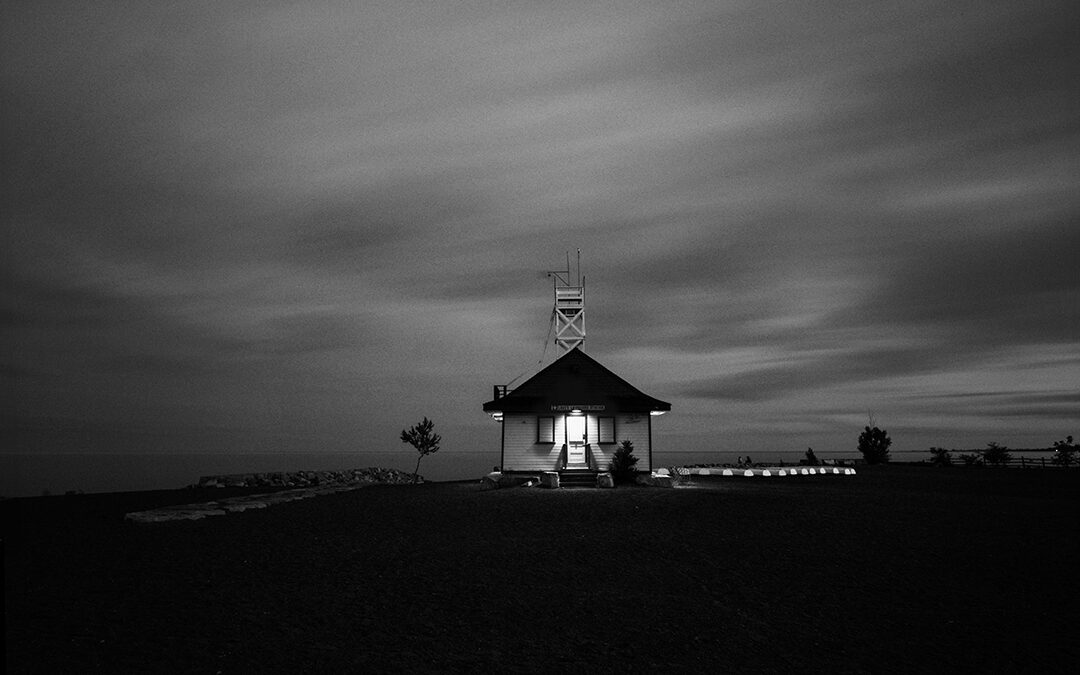
Black and white long exposure photography, especially in the context of waterscapes, is an artistic medium that transcends the limitations of color, embracing texture, contrast, and the fluid nature of time. Lake Ontario, with its vast shoreline and serene beauty, offers a magnificent canvas for photographers, particularly near Toronto, where the urban landscape meets natural tranquility. Capturing waterscapes in long exposure using this monochromatic approach can evoke feelings of calm, timelessness, and drama. The images seen here are taken across Lake Ontario, Lake Erie and the Georgian Bay
The absence of color in black and white photography enhances contrast, drawing attention to the interplay between light and shadow, shape and texture. For waterscapes, this simplification of elements transforms the viewer’s perception, emphasizing the fluidity of water and the permanence of the surrounding environment.
In black and white long exposure photography, the smooth water surface becomes almost glass-like, creating a dreamlike quality. The soft gradients of the sky, the reflection of the clouds, and the detailed textures of rocks, docks, or shorelines all become heightened without the distraction of color. This minimalist aesthetic encourages the photographer to focus on composition and storytelling through the play of light and form.
Long exposure photography captures a scene over an extended period, allowing the camera’s sensor to absorb more light and movement. When applied to waterscapes, the technique can turn the natural motion of water, such as waves, into a misty, ethereal surface. This effect is particularly stunning on lakes, where the constant ebb and flow of the waves can be transformed into a soft, velvety texture, contrasting against the static elements at the shores or the Toronto skyline.
To achieve this effect, I have used neutral density (ND) filters, which limit the amount of light entering the camera, allowing for longer exposure times during the day. For waterscapes, exposure times can range from a few seconds to several minutes, depending on the desired level of smoothness in the water. Using it after sunset has also helped to keep the camera open for over 5 minutes.
Ultimately, long exposure photography is about patience and observation, allowing the photographer to slow down and truly see the world. When captured in black and white, waterscapes on these great lakes become something more: a serene, monochromatic world where light and time blend into one.
All images are taken in 2024.
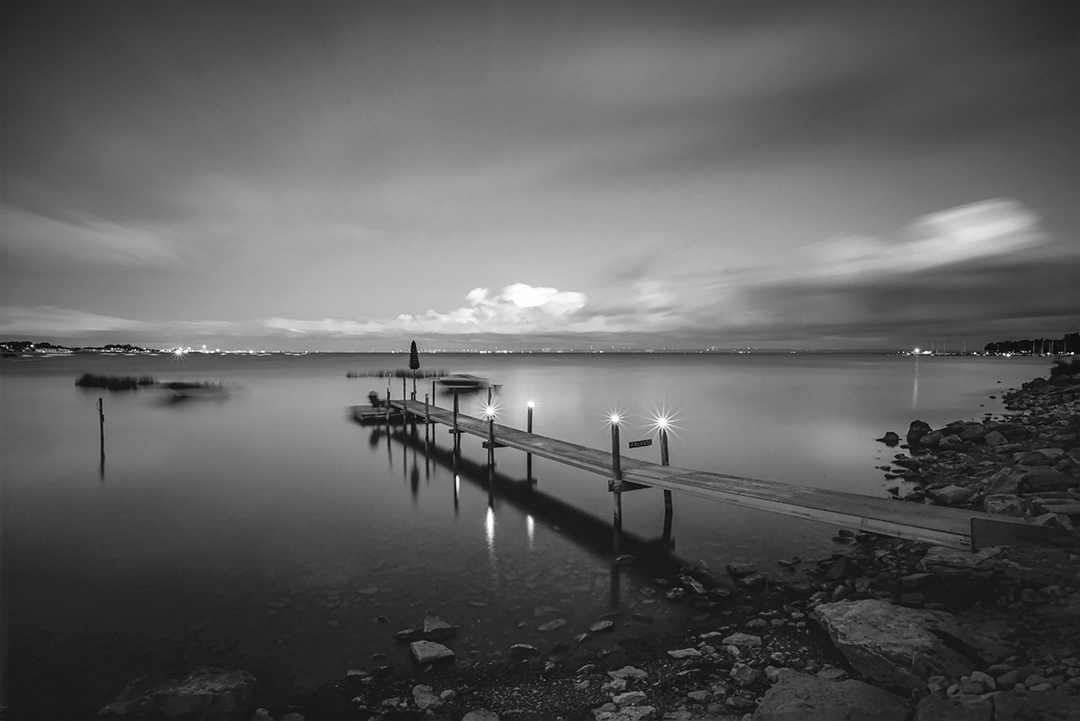
Title: Pier at Dusk, Camera: Sony A7R III, Lens: Tamron 11-20mm, Aperture f/16, Shutter speed: 149 seconds, Focal Length: 11mm, ISO:50
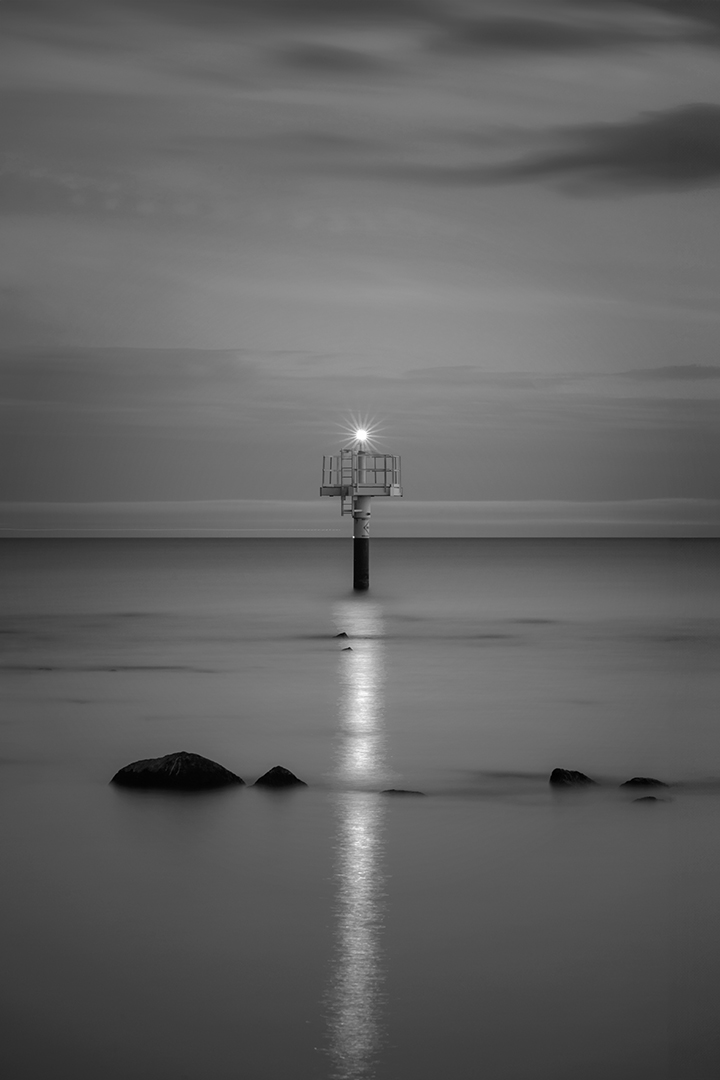
Title: Sentinel, Camera: Sony A7R III, Lens: Sigma 35-150 mm, Aperture f/16, Shutter speed: 96 seconds, Focal Length: 150 mm, ISO:50
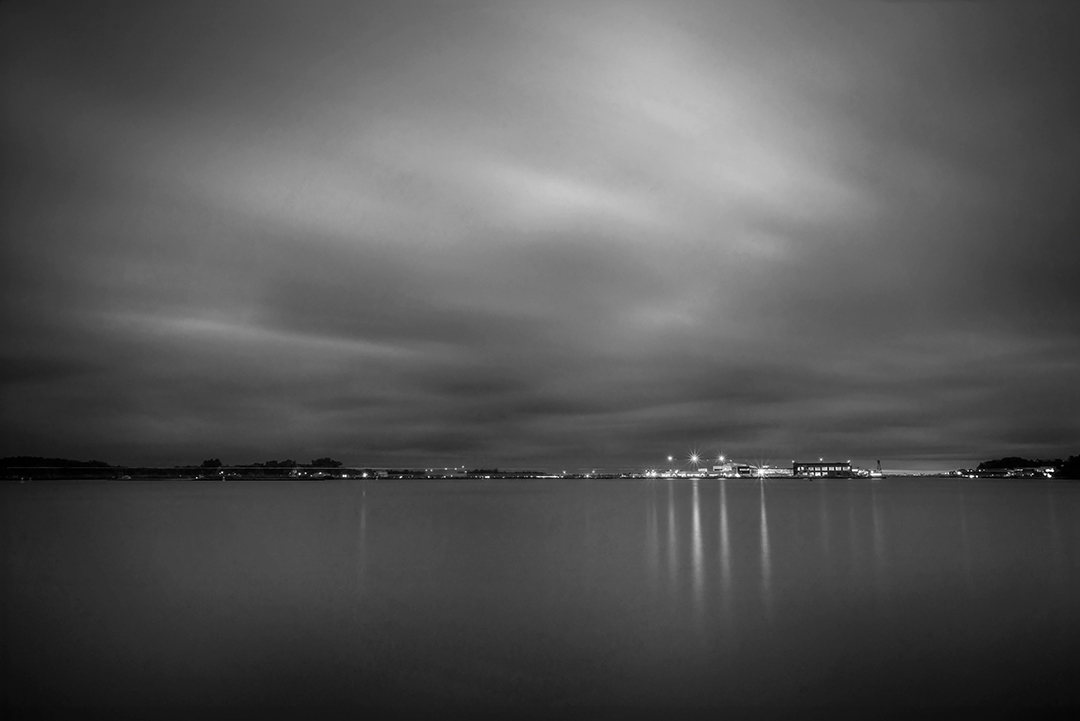
Title: Nightfall, Camera: Sony A7R III, Lens: Tamron 11-20mm, Aperture f/16, Shutter speed: 310 seconds, Focal Length: 16 mm, ISO:50
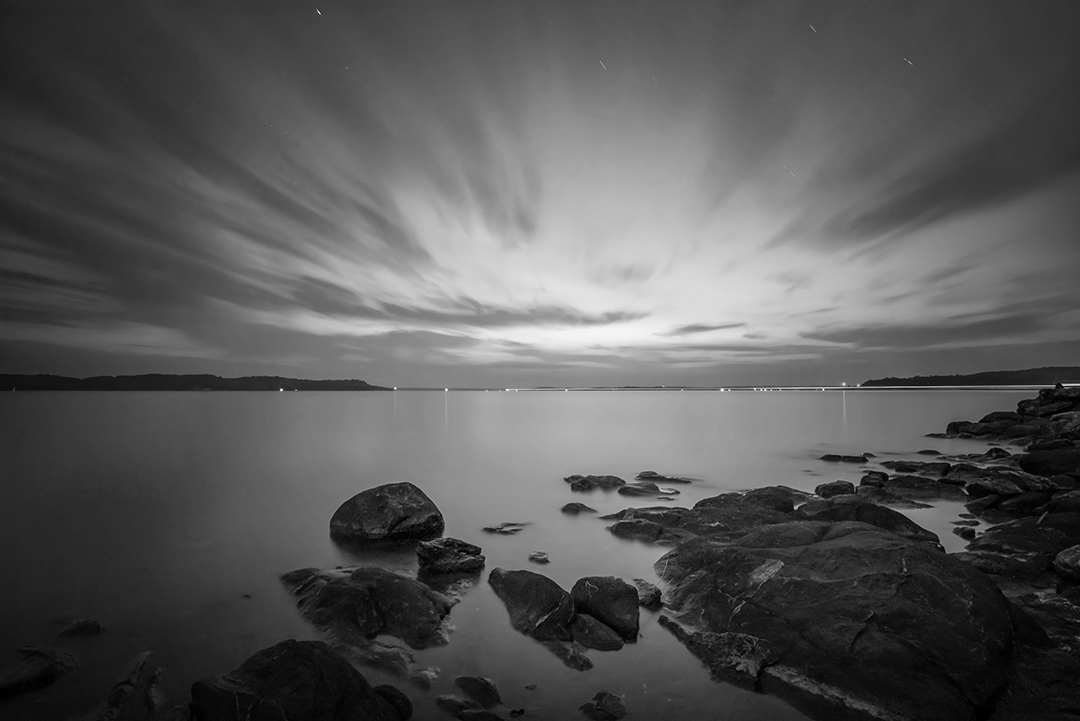
Title: Parry Sound at Dusk, Camera: Sony A7R III, Lens: Tamron 11-20mm, Aperture f/11, Shutter speed: 497 seconds, Focal Length: 11 mm, ISO:50
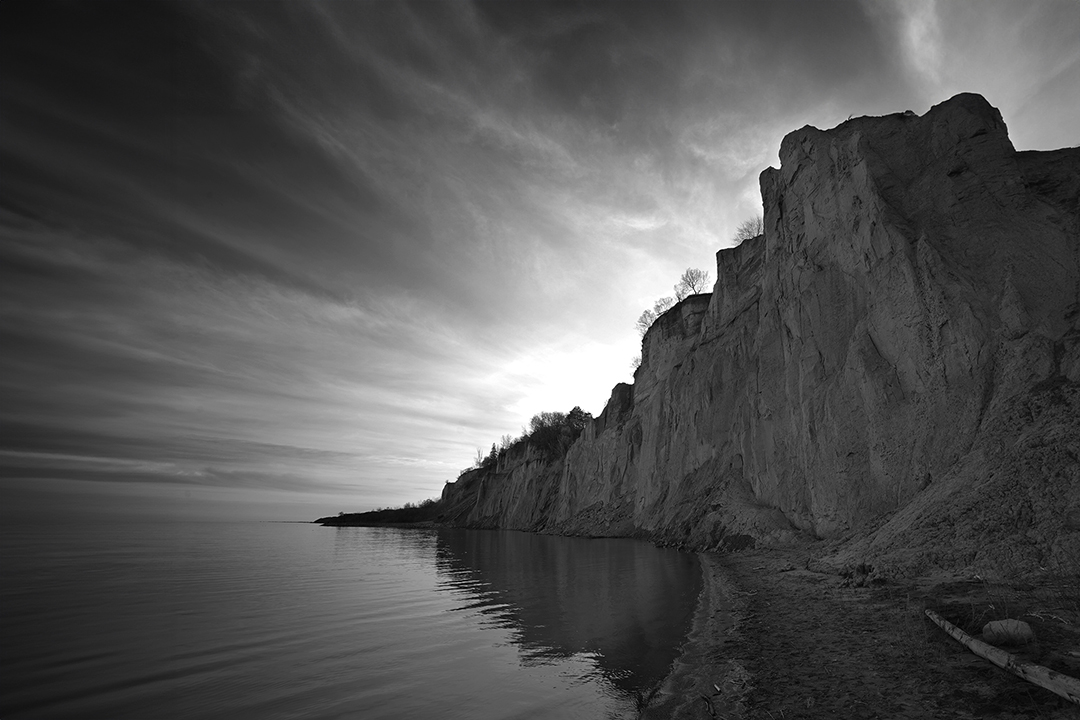
Title: Sacrborough Bluffs, Camera: Sony A7R III, Lens: Tamron 11-20mm, Aperture f/16, Shutter speed: 1/15 seconds, Focal Length: 11 mm, ISO:50
Camera Gear
All images have been taken with a Sony A7Riii camera body with Tamron 11-20 mm, f2.8 lens, 6 Stop ND filter, tripod and a shutter release cable.
Conversion to B&W and edited using Adobe Lightroom & Photoshop.